Silent protectors: How bats affect our agriculture
Written by youth Apprentice Asees R.
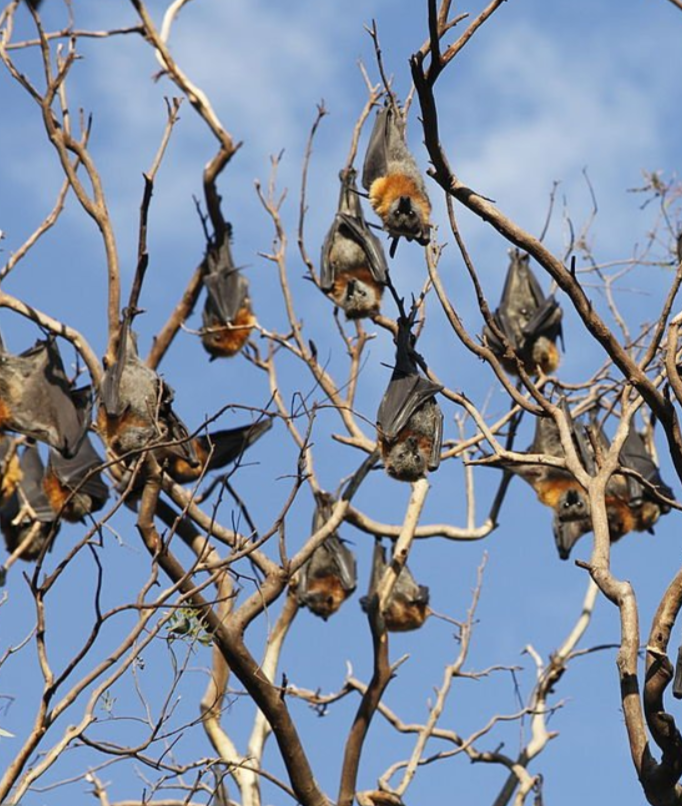
Image courtesy of freeimages.com - CraigRJD; a group of large bats, commonly known as flying foxes (genus Pteropus), hang upside down from tree branches. They have brown-orange bodies, long snouts, and large midnight-black wings that fold around them like cloaks.
Abstract
While hiking late at night in Yosemite National Park, I was surprised by pitch-black creatures flying high in the sky. Upon returning to camp, I found out they were bats, and I felt a mixture of both fear and fascination. At that moment, I didn’t know how important these mammals are to the environment and agriculture, but I was curious to learn more.
Introduction
Bats are nocturnal animals that make up around 20% of all mammal species worldwide (Bat Conservation Trust, 2019). In fact, they are the only mammals that can truly fly. There are many misconceptions about bats that exist in people’s minds. For example, many individuals believe bats drink human blood. However, only 3 of the known 1,100 species of bats will drink human blood (Osterloff, 2017). Some people also believe that bats have no purpose, but in reality, bats are one of the greatest allies to farmers and humanmankind alike. In this field note, I will explain how bats are beneficial through managing insect populations, helping our agriculture and economy around the world, and how a decline in their populations can negatively affect humans.
Insect Eating Machines
Many bats play a crucial role in controlling insect population growth. Insectivorous bats - those that dine upon insects - primarily eat insects such as mosquitoes, moths, and beetles. Bats can devour a large amount of insects in one night. The little brown bat (Myotis lucifugus) “can easily catch 1,000 mosquito-sized insects in an hour; a nursing mother eats approximately 4,500 insects every night” (Farmer, 2022). Now imagine 150 bats, the size of a typical bat colony, eating that many insects in one night. Over the course of a few weeks, a colony of bats can annihilate hundreds of thousands of insects. As they consume such large numbers of insects, they control insect populations and prevent them from growing too large. If the insect population grows too large, it could affect every species in the ecosystem, from producers to even the largest animals. Too many insects would result in a shorter food supply as the insects would eat through all the crops (Wildlife X Team).
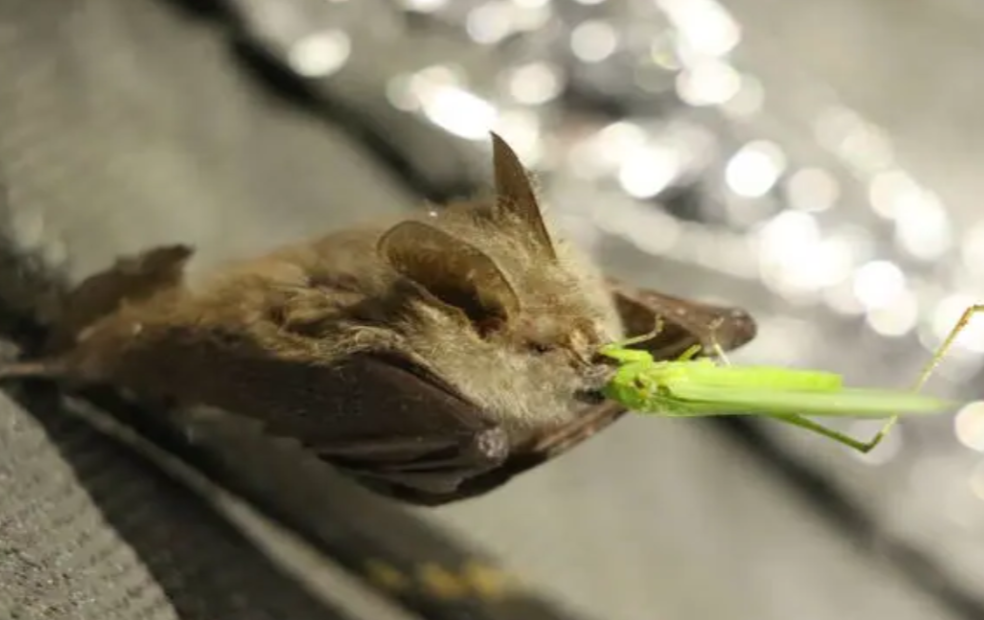
Image courtesy of freeimages.com -Marie Lemerle; A tan colored bat hanging upside down clings to a grey surface while eating a bright green grasshopper.
Furthermore, by eating large quantities of insects, bats are significantly helping our agriculture and economy. Insects, such as the Cotton Bollworm (CEW) (Helicoverpa armigera), consume large amounts of crops, feeding on cotton plants and forcing farmers to spray pesticides as a precautionary measure. This, in turn, can affect a plant’s growth rate and lifespan (Gunstone et al., 2021). A study by McCracken et al. from 2012 states: “Modeling efforts based on economic values of cotton production, the estimated numbers of bats in the region, and assumptions regarding the numbers of CEW in their diet, indicate a mid-value estimate of $1,700,000 for the annual ecosystem services provided by these bats to Winter Garden cotton growers in avoided crop damage and reduced need for pesticides” (McCracken, 2012). This study demonstrates that bats in Winter Garden, Florida consume an enormous amount of insects that damage the local cotton crops. By doing so, bats save farmers in this area alone around $1.7 million by reducing pesticide costs and profits lost on cotton crops.
Beyond cotton, bats play a huge role in protecting a wide variety of crops, including corn, wheat, and soybeans. Studies by the U.S. Department of Agriculture show that bats save more than 1 billion dollars in pesticide use and lost crops in just the United States alone (USDA, 2025). Additionally, pesticides harm the soil and animals living in it (Gunstone et al., 2021). If there are fewer insects to eat the crops, farmers could spray the plants with pesticides less often. Therefore, bats protect not only the crops but also the health of the soil and organisms that live within it. Overall, bats play an essential role in maintaining and protecting the health of our agricultural crops.
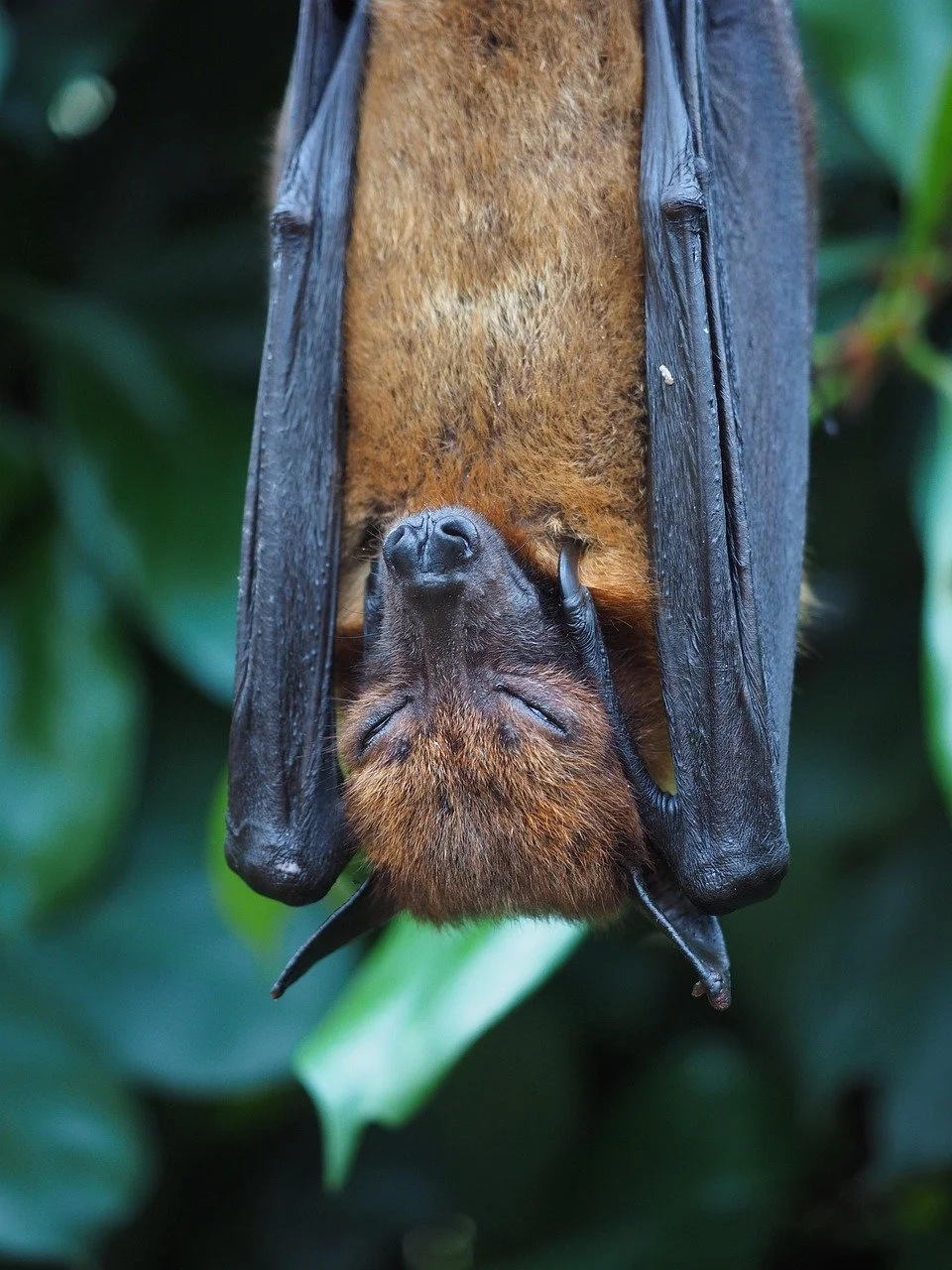
Image courtesy of pixabay.com - Hans; A brown bat with black wings hangs upside down from a tree branch sleeping. Its wings are folded around its body, while its head is tucked into its chest and ears are visible.
The Fallout of Disappearing Bats
Despite all these benefits that bats provide, their populations are in a current decline, which has cascading negative effects on our ecosystems and agriculture. In fact, “53% of North American bat species have moderate to very high risk of extinction in the next 15 years.” (Adams, 2024). The current decline is caused by several factors, including habitat loss, climate change, and white-nose syndrome (WNS).
Bats live in a variety of environments, including caves, hollow trees, buildings, and under bridges. Due to habitat loss, such as deforestation, many bats lose their homes and are forced to move elsewhere. Additionally, human exploration of caves for resources and the closure of abandoned mines make these habitats inaccessible similar to deforestation (Bat Conservation Trust, 2019). Furthermore, climate change contributes to droughts, which can lead to wildfires that destroy the habitats in which bats live (Schmitt, 2023).
Drought, which is influenced by climate change, also reduces water availability in arid environments that support a wide diversity of bat species. Droughts conditions result in fewer insects that reside in water and also less water for bats to drink. Both of these factors can lead to a drop in bat reproduction rates, as researchers have found out that bats rely heavily on water while they are pregnant (Piccioli, 2021).
In addition, bat populations are declining due to a fungal disease called White-nose syndrome (WNS), which has killed hundreds of thousands of bats in the last decade. The fungus affects hibernating bats by growing on their skin, disturbing their hibernation, and often causing dehydration and starvation, which ultimately leads to their death (USGS, 2021). These are just a few of the many reasons why bat populations are rapidly declining.
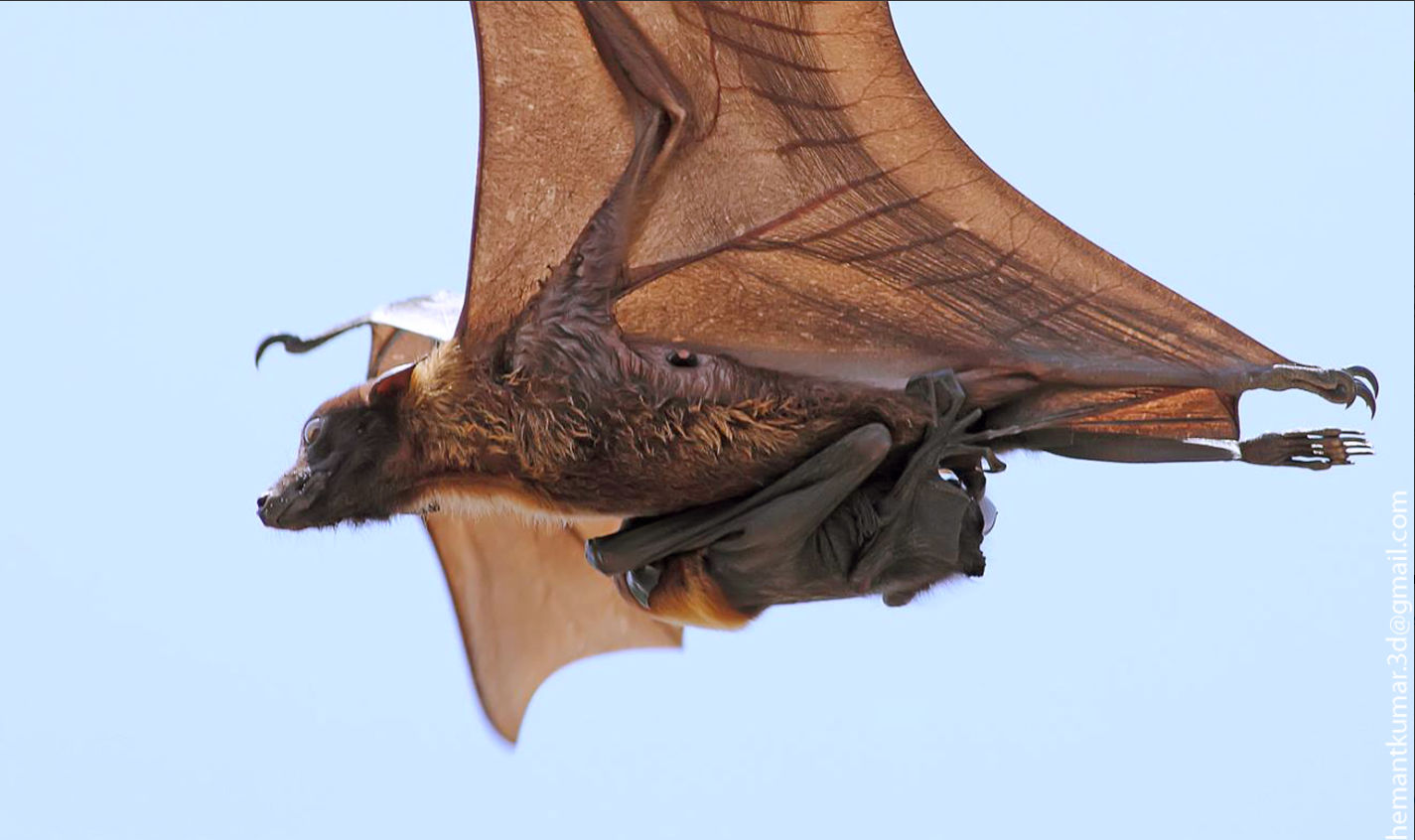
Image courtesy of inaturalist.org user hemant; A light brown bat flies across the blue sky with its wings fully spread out. The bat is carrying its baby in its pouch. The baby is partially out of its pouch, clinging to the underside of its mother’s body. The baby is near the mammary gland on the mother’s body.
This decline has a massive effect on ecosystems and agriculture, as bats play a crucial role in controlling insect populations, which benefits the economy. Now imagine if all insectivorous bat populations worldwide were cut in half. That would mean millions of insects per night going uneaten. These uneaten insects could then devour plants, including crops grown by farmers. More crops would be damaged, and more pesticides would need to be applied to hopefully prevent insects from eating them. Farmers would need to spend more money to grow additional crops or buy more pesticides, which also harm the soil.
Powerful Pollinators
Insectivorous bats are not the only types of bats that help agriculture! Many plants rely on nectarivorous bats to pollinate them. For instance, the Shaw’s Agave (Agave shawii) is dependent on the Mexican long-tongued bat (Choeronycteris mexicana) and other nectarivorous bats to pollinate it (U.S. National Park Service, 2017). Similarly, many flowers from crops such as mango, cacao, banana, and guava, also depend on bats for pollination (Bat Conservation Trust, 2019). With fewer bats, plants will not get pollinated, and fewer fruits would be produced. Overall, humans rely heavily on bats to help protect their crops and money. A decline in bats harms plants and humans alike.
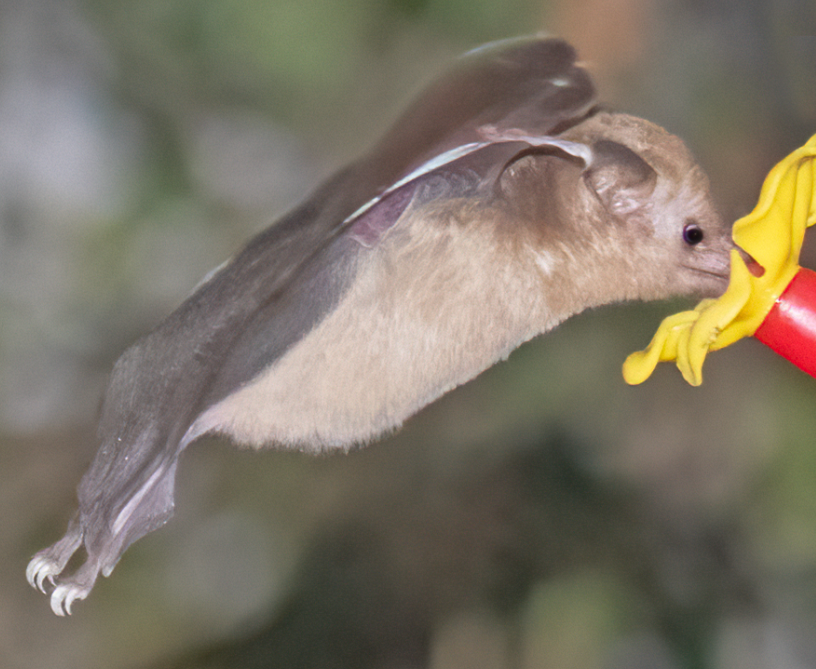
Image courtesy of inaturalist.org user marcopolo_amarillas; A grey colored bat hovers near a bright, yellow flower with its wings outstretched. The bat’s snout is in the open flower, feeding on nectar and pollinating the flower.
Conclusion
To summarize, bats consume a massive amount of insects every night. By eating insects, they help our agriculture in more ways than people know. Bats help protect our crops from being eaten and reduce the need for pesticides that can harm our soil and other organisms. As a result, bats save countries worldwide billions of dollars in both pesticide use and crop damage. Despite being incredible helpers to humans, bat populations are decreasing due to factors such as WNS. If this decline continues, it will cause serious harm to both human and plant communities. Bats are not as purposeless as I originally thought, and they need our help. You can help your local bat populations in many ways, such as building bat houses, avoiding disturbing bats in their natural habitats when you see them, and educating others about the importance of bats to stop the spread of misinformation.
References
Adams, A. M., Trujillo, L. A., Campbell, C. J., Akre, K. L., Arroyo-Cabrales, J., Burns, L., Dixon, R. D., Francis, C. M., Gamba-Rios, M., Kuczynska, V., McIntire, A., Medellín, R. A., Morris, K. M., Ortega, J., Reichard, J. D., Reichert, B., Segers, J. L., Whitby, M. D., & Frick, W. F. (2024). The state of the bats in North America. Annals of the New York Academy of Sciences, 1541(1). https://doi.org/10.1111/nyas.15225
Bat Conservation Trust. (2019). About bats.https://www.bats.org.uk/about-bats
CraigRJD. (2011). Bats [Stock photograph]. iStock by Getty Images. https://www.istockphoto.com/photo/bats-gm184387725-17648007
Farmer, S. (2022). It’s bat time U.S. Forest Service .https://www.fs.usda.gov/about-agency/features/its-bat-time
Gunstone, T., Cornelisse, T., Klein, K., Dubey, A., & Donley, N. (2021). Pesticides and soil invertebrates: A hazard assessment. Frontiers in Environmental Science, 9. https://doi.org/10.3389/fenvs.2021.643847
Hans. (2019). Flying dog, Aethalops, mammal [Photograph]. Pixabay. https://pixabay.com/photos/flying-dog-aethalops-mammal-4136563/
Hemant. (2013, May 19). iNaturalist observation [Photograph]. iNaturalist. https://www.inaturalist.org/observations/1516829
Lemerle, M. (2020). Bat eating a grasshopper/locust [Stock photograph]. iStock. https://www.istockphoto.com/photo/bat-eating-a-grasshopper-locust-gm1200356151-343793393
Marcopolo_amarillas. (2025, November 28). iNaturalist observation [Photograph]. iNaturalist. https://www.inaturalist.org/observations/329865854
McCracken, G. F., Westbrook, J. K., Brown, V. A., Eldridge, M., Federico, P., & Kunz, T. H. (2012). Bats tack and exploit changes in insect pest populations. PLoS ONE, 7(8), e43839. https://doi.org/10.1371/journal.pone.0043839
National Park Service. (2017) Shaw’s Agave: A species on the edge. www.nps.gov/articles/shaws-agave-a-species-on-the-edge.htm.
Osterloff, E. (2017). Do vampire bats drink blood? Natural History Museum. https://www.nhm.ac.uk/discover/do-vampire-bats-drink-blood.html
Piccioli Cappelli, M., Blakey, R. V., Taylor, D., Flanders, J., Badeen, T., Butts, S., Frick, W. F., & Rebelo, H. (2021). Limited refugia and high velocity range-shifts predicted for bat communities in drought-risk areas of the Northern Hemisphere.Global Ecology and Conservation, 28, e01608. https://doi.org/10.1016/j.gecco.2021.e01608
Schmitt, K. (2023, November 1). Bats feel the effects of climate change. Bat Conservation International. https://www.batcon.org/bats-feel-the-effects-of-climate-change/
U.S. Department of Agriculture. (2025, July 16). Celebrating the special powers of bats. (2025, July 16). https://www.usda.gov/about-usda/news/blog/celebrating-special-powers-bats
U.S. Geological Survey. (2021, April 21). White-nose syndrome killed over 90% of three North American bat species.https://www.usgs.gov/news/national-news-release/white-nose-syndrome-killed-over-90-three-north-american-bat-species
Wildlife X Team. (2025) What if insect populations tripled?www.wildlifexteam.com/about/blog/what-if-insect-populations-tripled.html
Further Resources
Celley, C. (n.d.).Bats are one of the most important misunderstood animals | U.S. Fish & Wildlife Service. Www.fws.gov. https://www.fws.gov/story/bats-are-one-most-important-misunderstood-animals
Leadership Academy youth apprentice Asees R. has been a part of the EcoLogik Institute for nearly two years. Asees began their journey as a camper in the Summer Experience program and has since grown into a member of both the Leadership Academy and the Conservation and Environmental Stewardship Apprentice Program (CESAP).
